How to Grow and Care for Cucumbers Indoors: A Complete Guide
Published: 24 Apr 2026
Growing cucumbers indoors is a practical and rewarding way to enjoy fresh vegetables without depending on outdoor space or seasonal changes. Many people assume cucumbers need a large garden, but with the right approach, they can thrive inside your home just as well. Indoor growing gives you full control over light, temperature, and watering, which allows you to create the perfect environment for steady and healthy growth.
Cucumbers are fast growing plants, and when their basic needs are met, they respond quickly with strong vines and consistent fruit production. The key is understanding how to replicate natural conditions in a controlled indoor setup. From selecting the right variety to managing light and nutrients, each step plays an important role in the overall success of your plant.
Choosing the Right Cucumber Variety
Selecting the right variety is one of the most important decisions you will make when growing cucumbers indoors. Not all cucumber plants behave the same way, and choosing a variety that naturally adapts to confined spaces will save you time, effort, and frustration later. Indoor environments favor plants that are compact, manageable, and capable of producing fruit without relying heavily on external pollination.
When you choose a suitable variety, you make the entire growing process smoother and more productive. It also ensures that your plant focuses its energy on producing cucumbers rather than struggling to adjust to limited space or light.
- Bush varieties that stay compact and are easier to control indoors
- Parthenocarpic varieties that produce fruit without pollination
- Dwarf hybrids designed specifically for container growing
- Mini cucumber types that grow faster and require less space
- English cucumbers that perform well in stable indoor environments
Setting Up the Perfect Growing Space
Creating the right growing environment indoors is essential because your plant depends entirely on you for its conditions. Unlike outdoor gardening, where nature provides sunlight, airflow, and temperature balance, indoor growing requires you to recreate these elements carefully. A well planned space helps the plant grow without stress and improves both its health and productivity.
A stable environment allows cucumbers to grow consistently without sudden interruptions. When the plant feels comfortable in its surroundings, it develops stronger roots, healthier leaves, and better fruiting potential.
- Place plants near a bright window where they can receive strong natural light
- Use grow lights to support growth when sunlight is not enough
- Keep plants away from cold drafts, heaters, or sudden temperature changes
- Maintain gentle airflow using a fan to prevent fungal issues
- Avoid moving the plant frequently once it starts growing
Choosing Containers and Support
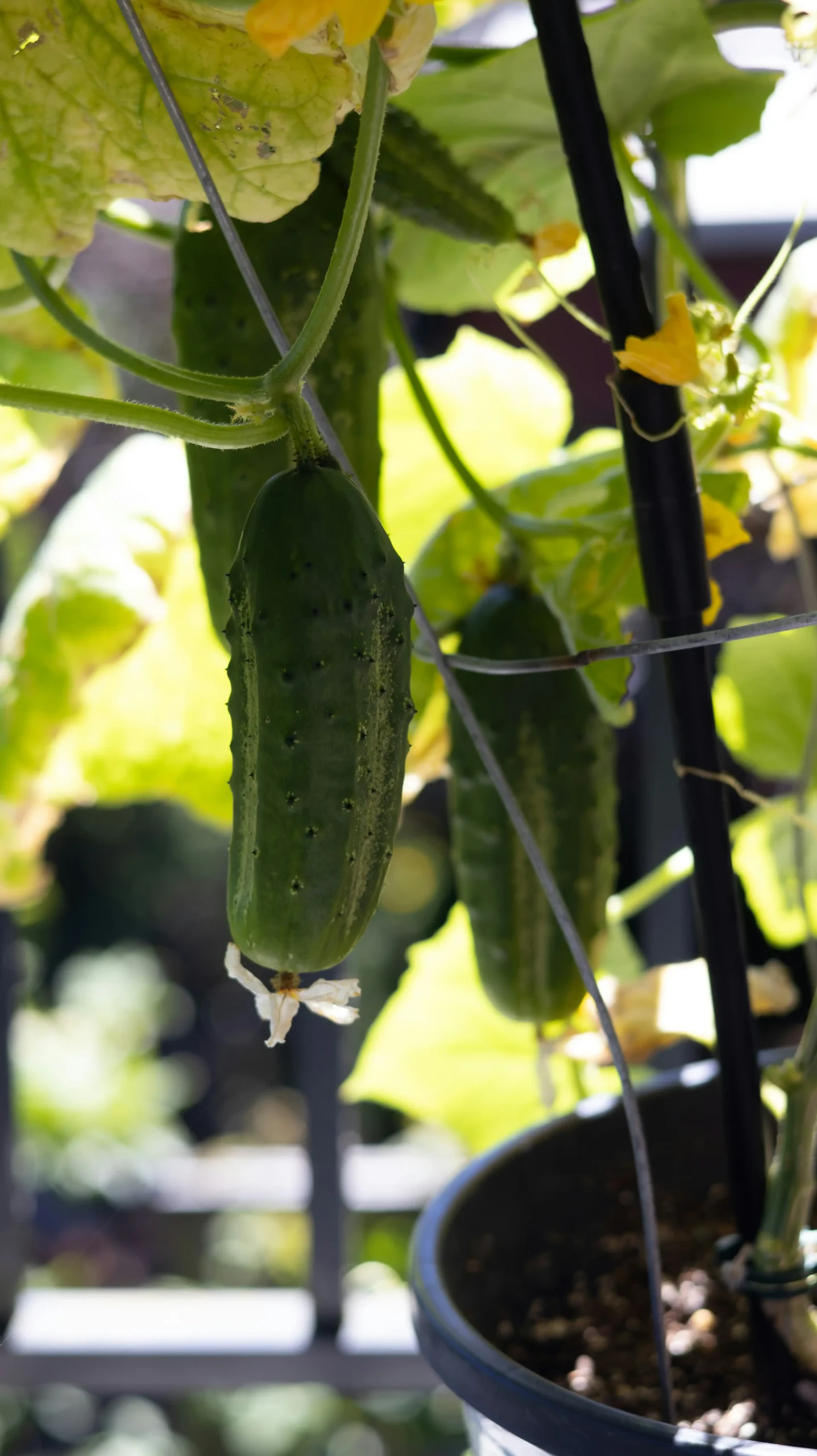
Cucumbers are vigorous growers, and even indoors, they need enough root space and proper support to develop correctly. Using the right container ensures that the roots can expand freely, while a support system helps guide the plant upward instead of letting it spread uncontrollably. This not only saves space but also improves airflow and light exposure.
When roots are healthy and vines are supported, the plant becomes more productive and easier to manage. A well structured setup also reduces the chances of disease and makes maintenance much simpler.
- Use containers that are deep enough to support root growth
- Ensure proper drainage to avoid water accumulation
- Choose strong pots that can handle plant weight as it grows
- Install a trellis or stake early to guide vertical growth
- Position support in a way that maximizes light exposure
Soil and Planting Method
Soil quality directly affects how well your cucumber plant grows indoors. Since the plant cannot draw nutrients from natural ground sources, it relies completely on the soil mix you provide. A balanced growing medium ensures that the roots receive enough oxygen, moisture, and nutrients at the same time.
Starting with the right planting method also sets the foundation for strong early growth. Healthy seedlings are more likely to develop into productive plants that can handle indoor conditions with ease.
- Use a light and well draining potting mix
- Add compost to improve nutrient content
- Include perlite or vermiculite to enhance aeration
- Plant seeds at the correct depth for proper germination
- Keep soil slightly moist until seedlings emerge
Light Requirements for Indoor Cucumbers
Light is one of the biggest challenges in indoor gardening, especially for plants like cucumbers that naturally thrive in full sun. Without sufficient light, the plant may grow weak, produce fewer flowers, or fail to develop fruit properly. Providing consistent and adequate light is essential for maintaining healthy growth and encouraging fruit production.
A good lighting setup ensures that the plant receives the energy it needs throughout its growth cycle. When light conditions are stable, the plant grows evenly and maintains strong, productive vines.
- Provide several hours of strong light each day
- Use grow lights when natural light is limited
- Position lights at an appropriate distance from the plant
- Rotate the plant occasionally for even growth
- Monitor leaves for signs of light deficiency
Watering the Right Way
Watering cucumbers indoors requires a careful balance because both overwatering and underwatering can cause problems. Unlike outdoor plants, indoor cucumbers depend entirely on your watering routine, which means consistency is key. Proper watering supports healthy roots, improves nutrient absorption, and prevents issues like bitterness in the fruit.
Understanding your plant’s moisture needs helps you avoid common mistakes and keeps the plant growing steadily without stress.
- Check soil moisture before watering
- Water deeply instead of giving small amounts frequently
- Allow excess water to drain out completely
- Adjust watering based on plant growth and environment
- Keep a regular watering schedule
Feeding and Fertilizing
Cucumber plants grow quickly and need a steady supply of nutrients to maintain that growth indoors. Since nutrients in containers can run out over time, regular feeding becomes necessary to keep the plant healthy and productive. A proper fertilizing routine helps balance leaf growth and fruit production.
When nutrients are provided in the right amounts, the plant develops strong vines, produces more flowers, and yields better quality cucumbers.
- Begin feeding after the plant develops true leaves
- Use a balanced fertilizer during early growth stages
- Switch to a fruit supporting fertilizer during flowering
- Apply nutrients in controlled amounts regularly
- Avoid overfeeding to prevent excessive leaf growth
Training and Pruning the Plant
Indoor cucumber plants benefit greatly from proper training and pruning. Since space is limited, guiding the plant’s growth helps maintain structure and prevents overcrowding. Pruning also improves airflow and allows the plant to focus its energy on producing fruit rather than unnecessary foliage.
A well managed plant is easier to care for and produces better results over time. Training and pruning also make your indoor garden look cleaner and more organized.
- Guide the main vine along a support structure
- Remove weak or unnecessary side shoots
- Trim damaged or yellow leaves regularly
- Maintain an open structure for airflow
- Encourage upward growth for better light exposure
Pollination Indoors
In an indoor environment, natural pollinators like bees are not present, which means some cucumber plants may need assistance to produce fruit. While certain varieties can produce cucumbers without pollination, others rely on manual help to complete the process.
Understanding how pollination works allows you to ensure that your plant successfully develops fruit instead of dropping flowers.
- Identify flowers that are ready for pollination
- Use a soft brush or cotton swab to transfer pollen
- Perform pollination during the early part of the day
- Repeat the process across multiple flowers
- Observe fruit formation after pollination
Common Problems and Solutions
Even in a controlled indoor environment, cucumber plants can face a few challenges. These issues are usually caused by imbalances in watering, light, or airflow. Recognizing early signs of problems allows you to fix them quickly before they affect the entire plant.
Staying attentive to your plant’s condition helps you maintain a healthy growing environment and ensures consistent production.
- Yellow leaves caused by excess water or nutrient issues
- Bitter cucumbers is due to irregular watering patterns
- Poor fruiting caused by lack of light or pollination
- Fungal problems caused by high humidity and low airflow
- Slow growth due to weak soil or lack of feeding
Harvesting Cucumbers at the Right Time
Harvesting cucumbers at the right stage is essential for getting the best taste and texture. Indoor cucumbers tend to grow quickly, so regular checking is important to avoid overripe fruit. Timely harvesting also encourages the plant to continue producing more cucumbers.
By understanding when and how to harvest, you can maintain a steady supply of fresh cucumbers from your indoor garden.
- Pick cucumbers when they are firm and properly sized
- Avoid letting them grow too large or turn yellow
- Use a clean cutting tool to remove the fruit
- Harvest frequently to stimulate new growth
- Handle the plant gently during harvesting
Final Thoughts
Growing cucumbers indoors may seem challenging at first, but once you understand the basics, it becomes a simple and enjoyable process. With the right setup, consistent care, and attention to detail, you can successfully grow healthy plants that produce fresh cucumbers throughout the year.
Indoor gardening is not just about growing food, it is about creating a controlled and rewarding system where you can see the results of your effort every day.
Cucumbers usually take around 50 to 70 days from planting to harvest, depending on the variety and growing conditions.
A container that is at least 10 to 12 inches deep with good drainage is ideal for healthy root development.
Cucumbers grow best in temperatures between 20 to 30 degrees Celsius.
Yes, cucumbers grow very well in hydroponic systems as long as they receive proper nutrients and strong light.
Most cucumber plants live for one growing cycle of about 2 to 4 months depending on care and variety.




- Be Respectful
- Stay Relevant
- Stay Positive
- True Feedback
- Encourage Discussion
- Avoid Spamming
- No Fake News
- Don't Copy-Paste
- No Personal Attacks
- Be Respectful
- Stay Relevant
- Stay Positive
- True Feedback
- Encourage Discussion
- Avoid Spamming
- No Fake News
- Don't Copy-Paste
- No Personal Attacks
