Top-Rated Grow Lights for Healthy Indoor Plants Year-Round
Published: 25 Apr 2026
Indoor gardening gives you full control over your plants but there’s one thing you simply can’t skip light. When natural sunlight is limited, grow lights become the backbone of healthy plant growth.
Whether you’re growing leafy greens, herbs, or fruiting plants like tomatoes and peppers, understanding grow lights can completely transform your indoor gardening results.
Everything you need to know to pick the right light and grow thriving plants indoors
Why Grow Lights Matter in Indoor Gardening
Plants rely on light for photosynthesis, the process that allows them to produce energy and grow. Outdoors, sunlight provides the full spectrum of light plants need. Indoors, however, light intensity is usually too weak or inconsistent.
This is where grow lights come in. Grow lights replicate sunlight and provide plants with the energy they need at every stage of growth.
Without proper lighting, plants may:
- Grow tall and weak or leggy growth
- Develop small or pale leaves
- Fail to produce flowers or fruit
Understanding Light Spectrum
Before choosing a grow light, it helps to understand one key concept: Light Spectrum.
Plants mainly use:
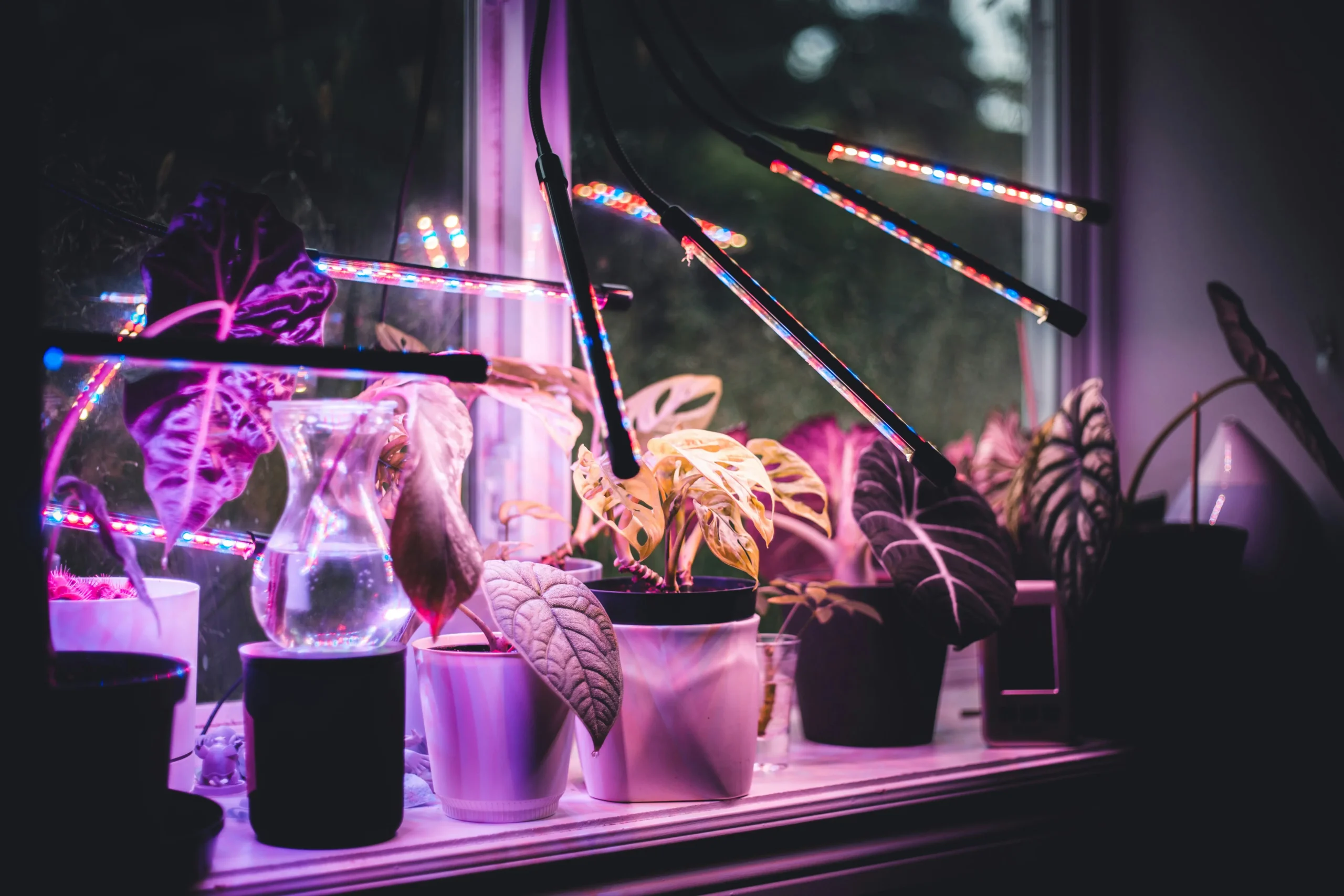
- Blue light → Helps with leaf growth and strong stems
- Red light → Supports flowering and fruit production
Most modern grow lights provide a full spectrum, means they mimic natural sunlight and support all growth stages.
Types of Indoor Gardening Grow Lights
Let’s explore the main types of grow lights available and how they differ.
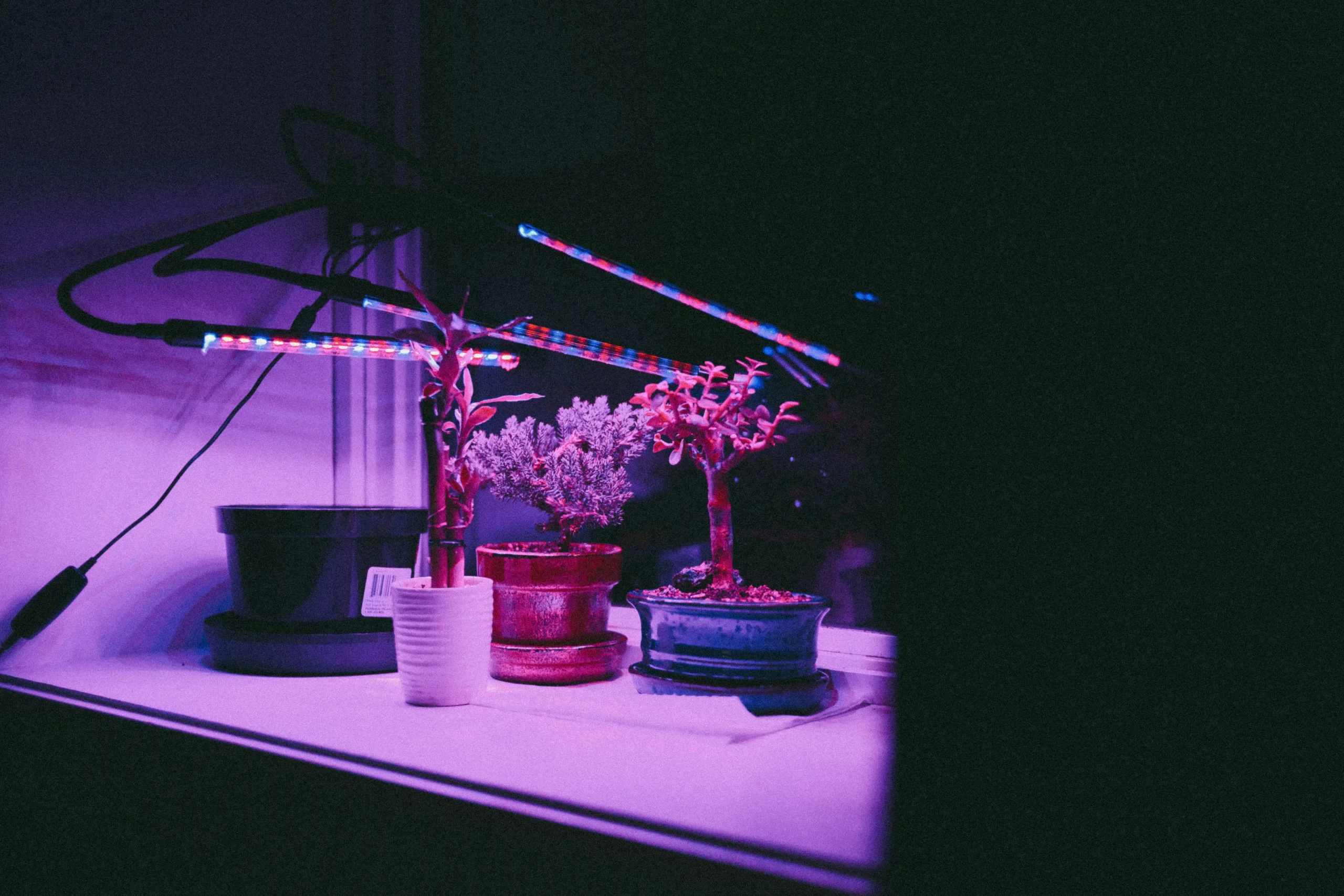
1. LED Grow Lights
What makes them great:
- Energy-efficient (low electricity cost)
- Long lifespan (can last years)
- Produce very little heat
- Available in full-spectrum options
Best for:
Beginners, herbs, leafy greens, tomatoes, peppers, almost everything.
Limitations:
Higher upfront cost compared to other lights.
2. Fluorescent Grow Lights
Fluorescent lights, especially T5 tubes, are widely used for seedlings and small plants.
Advantages:
- Affordable
- Easy to set up
- Low heat output
Best for:
Seed starting, lettuce, spinach, herbs.
Limitations:
Not powerful enough for fruiting plants like tomatoes or peppers.
3. HID Grow Lights (High Intensity Discharge)
HID lights are powerful and often used by advanced growers.
There are two main types:
1. Metal Halide (MH)
Good for vegetative growth
2. High Pressure Sodium (HPS)
Efficient for flowering
Advantages:
- Very strong light output
- Suitable for large indoor setups
Disadvantages:
- Produce a lot of heat
- High energy consumption
- Require additional equipment like ballasts
Best for:
Large-scale indoor gardening or professional setups.
4. Incandescent Lights
These are regular household bulbs.
Why they don’t work well:
- Too much heat
- Not the right light spectrum
- Very inefficient
Best for:
Avoid using them for plant growth.
Here’s a quick comparison to help you decide
| Feature | LED Lights | Fluorescent Lights | HID Lights |
| Energy Efficiency | Excellent | Good | Average |
| Heat Output | Low | Low | High |
| Lifespan | Very Long | Medium | Medium |
| Initial Cost | High | Low | Medium High |
| Best For | All Plants | Seedlings, Green | Large Setups |
| Maintenance | Low | Low | High |
For most indoor gardeners, LED grow lights are the best overall choice.
How to Choose the Right Grow Light
Choosing the right grow light depends on your plants and setup.
- Type Of Plants
- Leafy greens (lettuce, spinach) → Low to medium light
- Herbs → Medium light
- Fruiting plants (tomatoes, peppers) → High light
2. Space Available
- Small shelf → Compact LED or fluorescent
- Large indoor garden → High-power LED or HID
3. Budget
- Low budget → Fluorescent
- Long-term investment → LED
Light Distance & Placement
Placing your grow light correctly is just as important as choosing the right one.
- LED lights → 12–24 inches above plants
- Fluorescent → 6–12 inches
- HID → 24–36 inches (due to heat)
If lights are too far, plants become weak. Too close, and they may burn.
How Long Should Grow Lights Stay On?
Plants need both light and darkness.
- Most plants need 12–16 hours of light daily
- Seedlings may need up to 16–18 hours
Using a timer is highly recommended. It keeps your schedule consistent and hassle free.
Heat Management
Some grow lights (especially HID) produce heat, which can affect plant health.
Tips:
- Ensure proper ventilation
- Use fans if needed
- Monitor room temperature
LED lights are best if you want minimal heat issues.
Combining Light with Other Factors
Grow lights work best when combined with proper:
- Watering
- Soil quality
- Air circulation
- Nutrients
Even the best light won’t fix poor watering habits or bad soil.
Common Mistakes Beginners Make
Avoid these to get better results:
1. Using weak household lights
They don’t provide the right spectrum
2. Keeping lights too far away
Causes leggy growth
3. Leaving lights on 24/7
Plants need rest (dark period)
4. Ignoring plant type
Different plants need different light intensity
Best Grow Light Setup for Beginners
If you’re just starting, here’s a simple and effective setup:
- Full-spectrum LED grow light
- Adjustable height stand
- Timer for automatic lighting
- Small fan for airflow
This setup works for most plants and keeps things simple.
Grow lights are artificial light sources designed to mimic natural sunlight and support indoor plant growth. They are essential for indoor gardening because they provide the light energy needed for photosynthesis when natural sunlight is limited or unavailable.
LED grow lights are considered the best for indoor plants due to their energy efficiency, long lifespan, low heat output, and full spectrum light that supports all stages of plant growth.
Yes, using proper grow lights for indoor plants can speed up growth. By providing consistent and optimal light conditions, especially when natural light is insufficient.
The ideal grow light distance depends on the type
- LED grow lights: 12–24 inches
- Fluorescent lights: 6–12 inches
- HID grow lights: 24–36 inches
To choose the right grow lights for indoor plants, consider
- Plant type (herbs, greens, fruiting plants)
- Growing space size
- Budget
LED lights are usually the best all-around option.

- Be Respectful
- Stay Relevant
- Stay Positive
- True Feedback
- Encourage Discussion
- Avoid Spamming
- No Fake News
- Don't Copy-Paste
- No Personal Attacks
- Be Respectful
- Stay Relevant
- Stay Positive
- True Feedback
- Encourage Discussion
- Avoid Spamming
- No Fake News
- Don't Copy-Paste
- No Personal Attacks
