How to Grow Calathea Indoors With Healthy Leaves and Beautiful Foliage
Published: 1 Jul 2026
Calathea is one of the most striking plants you can grow indoors, but its patterned leaves can quickly show stress when the growing conditions are wrong. Brown edges, curling leaves, faded markings, and damaged new growth are common problems, especially when light, watering, humidity, and temperature are not balanced.
The good news is that Calathea does not need complicated care. It needs consistency. Give it bright indirect light, evenly moist but well drained soil, suitable water, warm temperatures, and enough humidity, and it can produce healthy foliage for years.
Start With the Right Light for Strong, Colorful Leaves
Light is one of the first things to get right because both too much and too little can cause problems.
Calathea grows best in bright indirect light. An east facing window is often ideal because it provides useful morning light without exposing the leaves to intense afternoon sun. In a brighter south or west facing room, position the plant farther from the glass or use a sheer curtain to filter direct sunlight.
Too much direct sun can scorch the delicate foliage, creating pale, faded, or crispy areas. Too little light creates a different set of problems. Growth may become slow, new leaves may remain small, and some varieties can lose the intensity of their markings.
A useful way to judge the location is to watch the new growth. If new leaves are developing normally and the plant is producing foliage consistently, the light level is probably suitable.
If growth becomes weak or stretched, increase the amount of usable light gradually rather than moving the plant directly into strong sunlight.
Use a Moisture Retentive Mix That Still Drains Well
Calathea needs moisture around its roots, but that does not mean its soil should remain saturated.
Use a quality indoor potting mix that retains some moisture while allowing excess water to drain. A mixture containing potting compost with materials such as perlite, fine bark, or another aerating component can help prevent the growing medium from becoming dense.
The container should always have drainage holes. If the plant sits inside a decorative cover pot, check that water has not collected at the bottom after watering.
The ideal growing medium should:
- Hold moisture without becoming soggy
- Allow air to reach the roots
- Drain excess water quickly
- Remain loose instead of becoming compacted
This balance is particularly important because a plant can show wilted or curled leaves even when its roots are sitting in excessively wet soil.
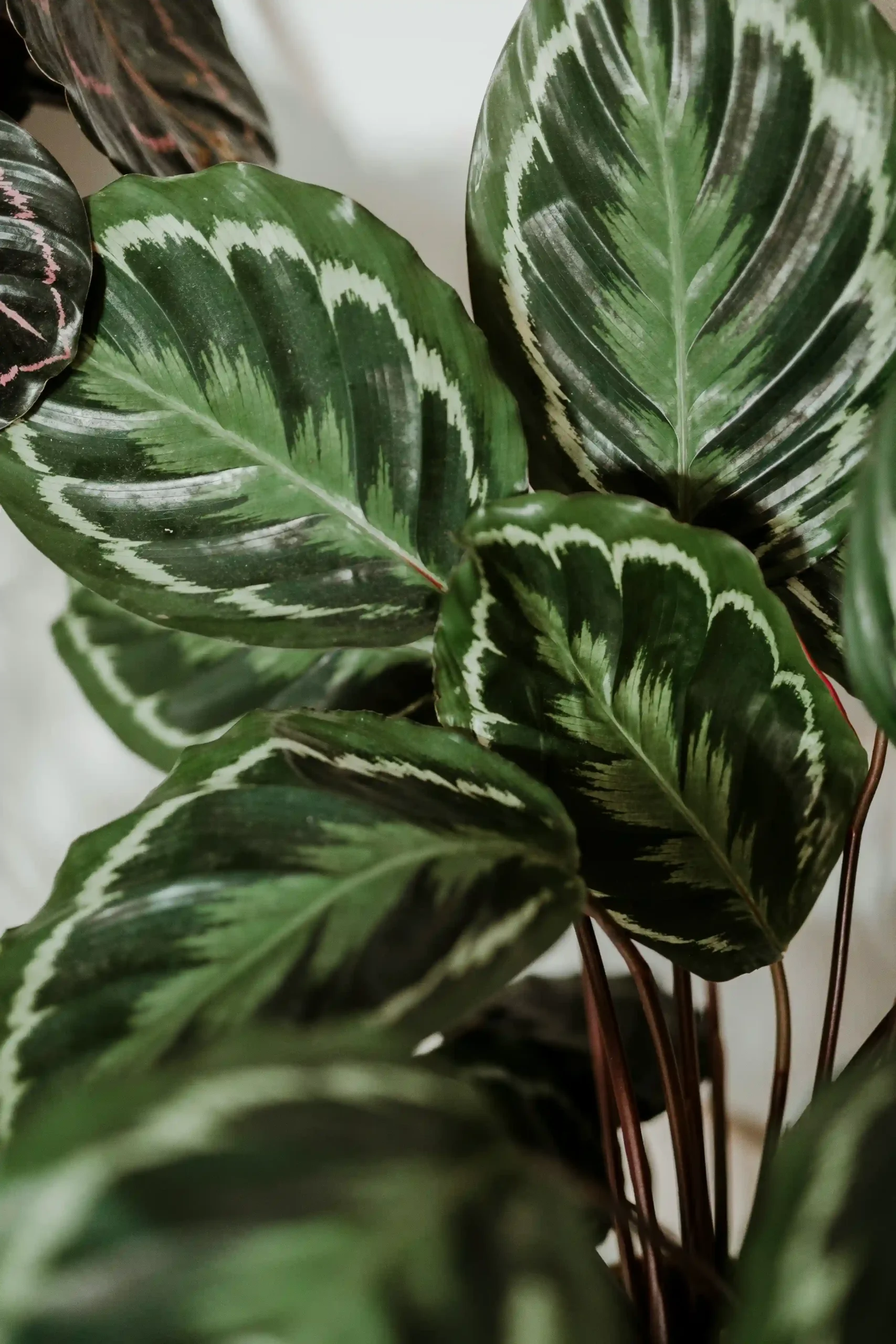
Water Calathea Based on Soil Moisture
Calathea performs best when the growing medium remains fairly evenly moist during active growth. However, watering every few days simply because the calendar says so can create problems.
Check the upper part of the growing medium before watering. When the surface has started to dry but the root area still has some moisture, water thoroughly until excess water leaves the drainage holes.
Never leave the container sitting in collected water. Waterlogged roots have less access to oxygen and can eventually deteriorate.
During autumn and winter, indoor growth usually slows as light levels decrease. The plant may therefore use water more slowly. Allow a little more drying at the surface between waterings, while still avoiding complete dryness.
The important distinction is this:
Calathea likes consistent moisture, not permanently wet soil.
Use Better Water When Brown Tips Keep Appearing
Water quality is an important issue that is often overlooked in general houseplant articles.
Calatheas can be sensitive to minerals and chemicals found in some tap water. If your plant repeatedly develops brown leaf tips despite suitable humidity and consistent watering, the water itself may be contributing to the problem.
Rainwater is an excellent option. Filtered or distilled water can also be useful when local tap water is particularly hard.
If you normally use tap water, allowing it to stand before watering may help with chlorine, although this does not remove dissolved minerals. Therefore, persistent brown tips should be investigated rather than automatically blamed on one factor.
Also check fertilizer use, humidity, direct sunlight, root health, and watering consistency.
Keep Humidity High Without Keeping the Soil Wet
Humidity is important for Calathea because dry indoor air can cause leaf edges and tips to become brown and crispy.
Bathrooms and kitchens can sometimes provide naturally more humid conditions, provided they also receive enough light. In drier rooms, a humidifier is generally more dependable than occasional misting because it raises humidity for longer periods.
Grouping several plants together can also create a more humid local environment.
However, there is an important distinction that many care guides fail to explain:
High humidity does not mean the soil should stay wet.
A plant can have humid air and waterlogged roots at the same time. These are separate parts of its growing environment and need to be managed separately.
Why Are Calathea Leaves Curling?
Curling is one of the most confusing Calathea problems because it can have several causes.
If the leaves curl while the soil is genuinely dry, underwatering is an obvious possibility. But if the soil is already wet, adding more water can make the problem worse.
Check the entire environment before watering again.
- Dry indoor air can increase leaf moisture loss
- Direct sunlight can cause heat stress
- Cold drafts can trigger stress
- Waterlogged roots can interfere with normal water uptake
- Low light can weaken overall growth
- Recent environmental changes can temporarily affect foliage
If curling continues despite moist soil, inspect the roots and consider whether the plant is receiving too little light or sitting near a heater, air conditioner, or draft.
Keep Temperatures Stable Throughout the Year
Calathea prefers warm, stable indoor conditions rather than sudden temperature changes.
A comfortable range around 16 to 21°C is suitable for many indoor Calatheas. Keep the plant away from radiators, fireplaces, heating vents, strong air conditioning, and cold drafts.
Winter can be particularly difficult because a plant may experience several stresses at once. Light levels decrease, indoor air becomes drier, and heating systems increase temperature fluctuations.
Instead of moving the plant repeatedly, find a stable location with suitable light and keep its environment as consistent as possible.
Feed Enough for Growth Without Overfertilizing
Calathea does not need heavy feeding. During active growth, a balanced houseplant fertilizer can support the production of new foliage when used according to the product instructions.
Monthly feeding during the growing season is a reasonable approach for established plants, while feeding can be reduced or stopped during the darker winter months.
Avoid increasing fertilizer simply because growth has slowed. Low light, damaged roots, poor watering, or temperature stress can all reduce growth, and extra fertilizer will not correct those problems.
If the plant has recently been repotted into fresh nutrient containing compost, additional fertilizer may not be necessary immediately.
Why Are Calathea Leaves Turning Brown?
Brown leaves are a symptom rather than a diagnosis.
Brown tips often point toward dry air or inconsistent moisture, but water quality, excessive fertilizer, direct sunlight, heat, and root problems can create similar damage.
Look at the pattern of the damage.
If only the tips and margins are brown, check humidity and water quality first. If large patches are bleached or scorched, investigate direct sunlight. If yellowing occurs together with persistently wet soil, inspect drainage and root health.
Do not cut the leaves immediately without investigating the cause. Removing damaged foliage may improve the appearance, but the problem will return if the growing conditions remain unchanged.
Why Are New Calathea Leaves Damaged?
New leaves deserve special attention because they are still developing when they emerge.
A new leaf that becomes stuck, torn, brown, or distorted can indicate that the plant experienced stress while the leaf was forming. Low humidity, inconsistent moisture, temperature changes, root problems, and pests can all interfere with normal development.
Do not repeatedly touch or force a partially unfurled leaf open. Allow it to develop naturally while improving the surrounding conditions.
The most useful question is whether the next new leaf improves. If every new leaf emerges damaged, the growing environment still needs attention.
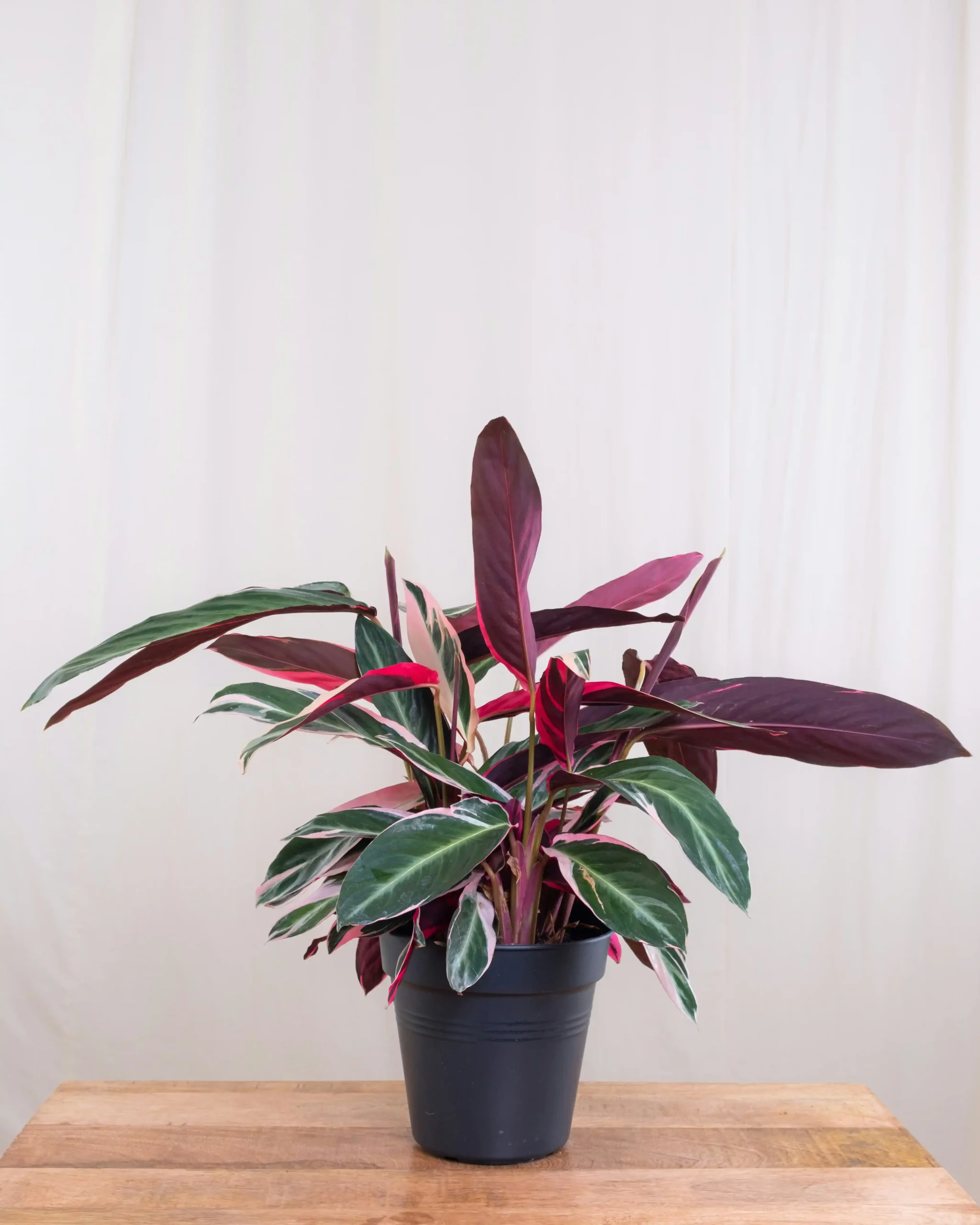
Prune Brown Leaves Without Weakening the Plant
Calathea does not require regular shaping like many vining houseplants. Pruning is mainly useful for removing dead or heavily damaged foliage.
Use clean scissors and remove severely damaged leaves close to the base of their stem. If only a small section is brown, you can trim the damaged tissue to improve the appearance without removing an otherwise healthy leaf.
Avoid cutting large amounts of healthy foliage at once. The remaining leaves are still producing energy for the plant, and healthy new growth should be encouraged before major removal.
Repot When the Root System Actually Needs More Space
Repotting should solve a problem rather than become part of a routine.
Move the plant into a new container when the root system has substantially filled the existing pot, the growing medium has become compacted or degraded, or drainage has become difficult to manage.
Choose a container only one or two sizes larger than the current rootball. A much larger pot holds more unused soil, which can stay wet for too long.
Spring or early summer is generally a convenient time to repot because the plant is entering or already experiencing active growth.
After repotting, return it to stable conditions rather than immediately changing its light, watering, and feeding routine at the same time.
How to Encourage Healthy New Foliage
The best way to produce attractive new leaves is to improve the growing environment rather than searching for a single product.
Focus on consistency:
- Provide bright indirect light
- Keep the root zone evenly moist
- Improve humidity when indoor air is dry
- Avoid sudden temperature changes
- Use suitable water
- Feed moderately during active growth
- Keep the roots in an airy, well drained mix
Healthy new growth is one of the best indicators that your care routine is working.
Watch for Spider Mites and Other Indoor Pests
Calathea can attract pests when conditions are stressful, particularly spider mites in dry indoor environments.
Inspect the undersides of leaves and the newest growth regularly. Fine webbing, pale speckling, silvery patches, distorted foliage, or clusters of small insects should be investigated promptly.
Other common houseplant pests can also affect Calathea, including mealybugs, scale insects, and fungus gnats.
If you discover an infestation, isolate the plant from nearby houseplants and identify the pest before treating it. Early detection makes management much easier.
A Practical Calathea Troubleshooting Guide
When something looks wrong, change one major factor at a time. This makes it much easier to identify the actual cause.
Brown tips: Check humidity, water quality, watering consistency, fertilizer, and nearby heat sources.
Brown patches: Check for direct sunlight, damaged tissue, environmental stress, or disease.
Curling leaves: Check soil moisture, humidity, temperature, light, and root health.
Yellow leaves: Investigate excessive moisture, poor drainage, aging leaves, and root problems.
Small new leaves: Check light, root space, nutrition, and overall plant stress.
Fine webbing: Inspect closely for spider mites.
Weak growth: Check whether the plant receives enough usable light and whether the roots are healthy.
Mistakes That Make Calathea Harder to Grow
Most struggling plants are not suffering from one dramatic mistake. Several small problems often occur together.
Avoid these common habits:
- Keeping the soil wet continuously
- Allowing the plant to become completely dry
- Using very hard water when brown tips persist
- Placing the leaves in harsh direct sunlight
- Keeping the pot beside a radiator or air conditioner
- Fertilizing whenever growth slows
- Repotting into an oversized container
- Increasing humidity while ignoring poor drainage
- Treating every curled leaf as a sign of underwatering
The goal is not to constantly intervene. It is to create conditions that allow the plant to remain stable.
Final Thoughts
Growing Calathea indoors successfully is less about following a rigid care schedule and more about understanding what the plant is telling you. Brown edges, curling leaves, yellowing, and damaged new growth are clues that help identify problems with light, moisture, humidity, water quality, temperature, roots, or pests.
Give the plant bright indirect light, consistent moisture without waterlogging, humid air, stable warmth, and a well drained growing medium. Once these conditions are balanced, Calathea becomes far more manageable and can reward you with healthy, richly patterned foliage instead of a constant cycle of damaged leaves.
Frequently Asked Questions (FAQs)
Brown edges are usually caused by low humidity, poor water quality, underwatering, or dry indoor air. This is one of the most common issues with indoor growing.
This movement is completely normal. The leaves naturally raise and lower throughout the day because of a process called nyctinasty.
This usually happens because humidity is too low. Dry air makes it harder for delicate new leaves to open properly.
Ideal humidity levels include:
- 60 to 80 percent for best growth
- 50 percent minimum for decent growth
Light misting may help temporarily, but humidifiers are much more effective for maintaining stable humidity.
Brown edges can still appear because of mineral-heavy tap water, fertilizer salt buildup, root stress, or inconsistent watering.
Slow or no new growth is usually caused by low light, poor humidity, cold temperatures, root crowding, or lack of nutrients.
Pale foliage usually means too much direct light, nutrient deficiency, or stress from improper watering.
Weak patterns or faded markings usually happen because of too much sunlight, poor light quality, or overall stress.
Purple undersides are natural in many varieties and help the plant manage light efficiently in lower-light environments.




- Be Respectful
- Stay Relevant
- Stay Positive
- True Feedback
- Encourage Discussion
- Avoid Spamming
- No Fake News
- Don't Copy-Paste
- No Personal Attacks
- Be Respectful
- Stay Relevant
- Stay Positive
- True Feedback
- Encourage Discussion
- Avoid Spamming
- No Fake News
- Don't Copy-Paste
- No Personal Attacks
