How to Grow Anthurium Indoors and Keep It Flowering
Published: 2 Jul 2026
Anthurium is one of those indoor plants that can look healthy while still refusing to flower. You may have glossy green leaves, steady growth, and a plant that appears perfectly fine, yet months can pass without another colorful bloom. The problem is often not one missing fertilizer or watering trick. It is usually the balance between light, roots, moisture, humidity, and overall plant stress.
Growing Anthurium successfully indoors means creating conditions that support both foliage and flowering. Once the basic environment is right, the plant becomes much easier to understand. Instead of reacting to every yellow leaf or brown tip, you can use the plant’s growth patterns to identify what actually needs to change.
Give Anthurium a Home Where It Can Actually Grow
Before changing your watering routine or buying fertilizer, choose the right location.
Anthurium performs best in bright indirect light. A position near an east facing window can provide useful morning light, while a brighter south or west facing window may require some distance from the glass or a sheer curtain to prevent harsh direct sunlight.
The location should also be stable. Avoid placing the plant directly beside a heater, air conditioner, or frequently opened cold window.
A good indoor position should provide:
- Bright filtered or indirect light
- Warm and relatively stable temperatures
- Protection from harsh afternoon sun
- Some air movement
- Enough space for the plant to grow without being constantly disturbed
This first decision affects almost everything that follows. A plant kept in poor light will struggle to flower no matter how carefully it is fertilized.
Build the Root Environment Before Chasing Bigger Leaves
The roots are where many Anthurium problems begin.
Anthurium does not want its roots sitting in dense, waterlogged soil. It needs a growing medium that holds some moisture while leaving plenty of air around the roots.
A loose indoor mix containing moisture retaining material together with perlite, bark, or another coarse component can work much better than heavy garden soil. The exact recipe matters less than the final texture. When watered, the medium should become moist without turning into a compact, muddy mass.
The container also needs drainage holes.
If water takes a long time to drain or the soil remains wet for many days, do not solve the problem by changing the watering schedule alone. The growing medium and container may be the real cause.
Healthy roots give the plant a much better foundation for producing both leaves and flowers.
Water When the Plant Needs It, Not When the Calendar Says So
Anthurium likes consistent moisture, but its roots also need periods of air around them.
Check the upper part of the growing medium before watering. When it has begun to dry, water thoroughly and allow excess water to drain away completely.
Do not leave the pot sitting in collected water.
At the same time, avoid allowing the entire root zone to become completely dry over and over again. Severe drying followed by heavy watering creates an unstable environment that can stress the plant and damage delicate roots.
The easiest way to avoid both extremes is to learn how quickly your particular plant dries out. A small plant in a bright room may need water much sooner than a large plant in a cooler, dimmer location.
Why Better Water Can Make a Difference
If your Anthurium repeatedly develops brown tips even though the soil moisture seems appropriate, look beyond watering frequency.
The water itself can contribute to leaf damage, particularly where tap water contains high levels of dissolved minerals. Rainwater or filtered water can be useful alternatives.
However, do not assume every brown tip is caused by tap water.
Also investigate:
- Dry indoor air
- Inconsistent watering
- Excess fertilizer
- Strong direct sunlight
- Root damage
- Heat from nearby appliances
The most useful evidence comes from the new leaves. Old damaged tissue will not become healthy again, so judge your changes by whether future growth develops more cleanly.
The Real Reason Anthurium Stops Flowering
This is where many indoor growers become frustrated.
Anthurium can remain alive and produce attractive leaves without having enough light or energy for consistent flowering. If your plant looks healthy but has stopped producing flowers, light should be one of the first things you investigate.
Move the plant gradually toward a brighter location with filtered light rather than placing it immediately in strong direct sun.
Do not assume that more fertilizer will solve the problem. A plant cannot compensate for poor light simply by receiving additional nutrients.
Flowering also becomes less reliable when the plant is repeatedly stressed by:
- Waterlogged roots
- Severe drying
- Very dry air
- Cold temperatures
- Sudden changes in location
- Poor light
The goal is to create a stable environment where the plant can maintain healthy leaves while gradually building enough energy for flowering.
How to Encourage Anthurium to Bloom Again
Once the basic conditions are corrected, focus on consistency rather than forcing the plant to flower.
Give it strong indirect light, maintain appropriate moisture, provide warmth, and avoid major environmental changes.
If the plant has been growing in a dark corner, improve the light gradually. If the roots have been staying wet, fix the growing medium and drainage before increasing watering. If the room is extremely dry, improve the humidity around the plant.
A healthy plant that is receiving suitable light should eventually show stronger new growth and improved flowering potential.
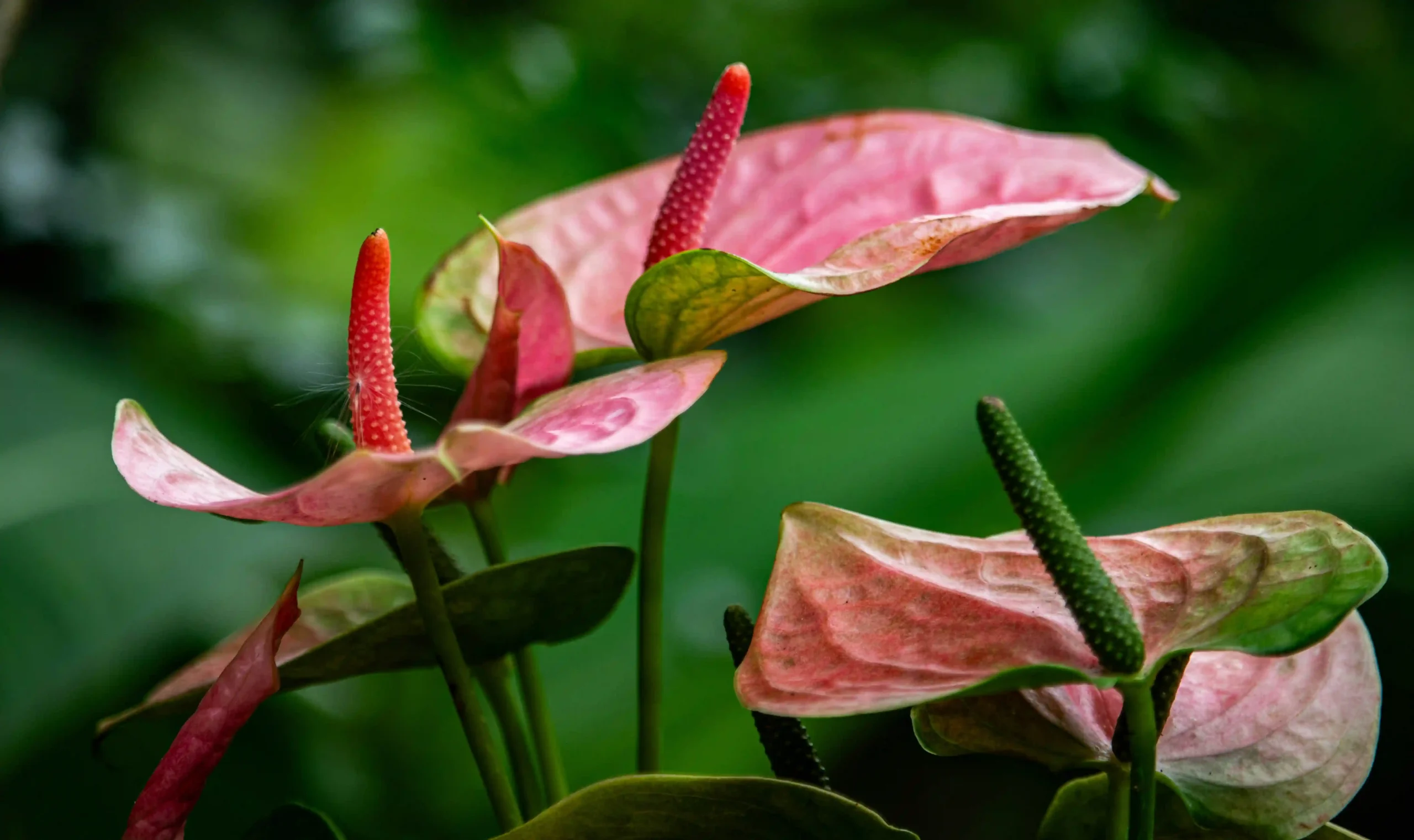
When a colorful spathe begins to fade, remove the spent flower stalk with clean scissors near its base. This keeps the plant tidy and allows new growth to take priority.
Why Anthurium Has Leaves but No Flowers
A leafy Anthurium that refuses to bloom gives you useful information.
If the foliage is healthy but flowers are absent, check the light first.
If the leaves are also small, pale, or weak, the problem may be broader and could involve roots, nutrition, or overall growing conditions.
If the plant has recently been repotted, moved, divided, or exposed to a major change in temperature, flowering may temporarily slow while it adjusts.
Do not respond to every flowering problem with fertilizer. First ask whether the plant has enough light and whether the roots are functioning properly.
Read Brown, Yellow and Curled Leaves Differently
One of the easiest ways to make Anthurium care unnecessarily complicated is to treat every damaged leaf as the same problem.
Brown crispy edges
Look at humidity, water quality, watering consistency, fertilizer concentration, and nearby heat.
Yellowing leaves
Check the soil before watering again. Persistently wet soil and poor drainage can create root problems that eventually appear as yellow foliage.
An older lower leaf turning yellow while the rest of the plant remains healthy can simply be part of normal leaf replacement.
Curling leaves
Check moisture, temperature, humidity, light intensity, and root health.
If the soil is already wet, do not automatically add more water.
Bleached or scorched patches
Look for strong direct sunlight, particularly on leaves positioned close to hot window glass.
The pattern of damage often tells you more than the color alone.
Give Anthurium Humidity Without Creating a Wet Root Zone
Anthurium benefits from humid indoor air, especially when the surrounding air becomes dry because of heating or air conditioning.
A humidifier is one of the most dependable ways to increase humidity. Grouping plants can also help create a slightly more humid local environment.
But there is an important distinction:
Humidity belongs to the air. Moisture belongs to the roots.
Increasing humidity does not mean you should water more frequently.
A plant can have humid air and still suffer from waterlogged roots. Conversely, it can have moist soil while its leaves experience excessive moisture loss because the surrounding air is very dry.
Managing these two conditions separately makes Anthurium care much easier.
Repot Anthurium When the Roots Need Better Conditions
Do not repot simply because a certain number of months have passed.
Look at the plant and the root environment.
Repot when the roots have substantially filled the container, the growing medium has become compacted, drainage has deteriorated, or the existing mix no longer provides the airy structure the roots need.
Choose a container only slightly larger than the current root system.
A huge container is not an upgrade. It contains more unused soil, which can remain wet for longer and increase the risk of root problems.
When you remove the plant, inspect the roots. Healthy roots should be firm rather than soft and deteriorated.
If damaged roots are present, correcting the cause is more important than simply moving the plant into a larger pot.
How to Keep New Leaves Healthy
Healthy new growth is one of the best indicators that your Anthurium is finally receiving the right conditions.
New leaves should gradually expand without repeated browning, severe distortion, or unexplained damage.
If new growth repeatedly emerges poorly, check the environment rather than focusing only on old leaves.
Ask:
- Is the plant receiving enough usable light?
- Does the soil stay wet for too long?
- Does the plant become completely dry?
- Is the air extremely dry?
- Are the roots healthy?
- Has the temperature changed suddenly?
- Has fertilizer been applied too heavily?
This approach helps you correct the cause rather than repeatedly treating the symptom.
Prune Old Leaves and Finished Flowers Correctly
Anthurium does not need heavy pruning.
Remove completely dead or severely damaged leaves with clean scissors. If only a small part of a leaf is damaged, there is usually no need to remove the entire leaf immediately.
Healthy green tissue still contributes to the plant’s growth.
Spent flowers can be removed once their display is finished. Cut the flower stalk near its base rather than leaving a long declining stem attached to the plant.
Avoid removing large amounts of healthy foliage at once. A plant needs its leaves to produce the energy required for new growth and future flowers.
Propagate an Established Anthurium Carefully
Propagation is easiest when a mature Anthurium has developed multiple growth points or natural divisions.
During repotting, an established plant can sometimes be separated into sections, provided each division has healthy roots and an active growth point.
Do not divide a weak plant simply to produce more plants. Small divisions with inadequate roots can take much longer to establish and may struggle to recover.
For the strongest results, propagate a vigorous plant that is already producing healthy leaves.
Know When the Problem Is Actually Pests
Not every damaged leaf is an environmental problem.
Inspect the undersides of leaves, stems, leaf joints, and new growth regularly. Mealybugs, scale insects, aphids, and other common indoor pests can weaken Anthurium and distort new growth.
Look for:
- White cottony clusters
- Sticky residue
- Tiny insects around new growth
- Distorted leaves
- Unusual speckling
- Visible insects beneath leaves
If you find pests, isolate the plant before the problem spreads to nearby houseplants.
Early detection is much easier to manage than a large infestation.
A Five Minute Anthurium Health Check
When your plant starts looking different, do not immediately change everything.
Work through the plant in this order.
Look at the newest leaves first. They show the most recent growing conditions.
Check the soil. Is it dry, evenly moist, or staying wet for too long?
Look at the light. Is the plant receiving bright indirect light or sitting in a dark corner?
Check the environment. Is there dry air, direct heat, cold drafts, or sudden temperature changes?
Inspect the roots if problems persist. Persistent decline despite reasonable surface care can point toward root damage.
This simple process is often more useful than following a fixed care calendar.
Mistakes That Keep Anthurium From Reaching Its Potential
Anthurium usually struggles when several small environmental problems occur together.
Avoid:
- Keeping the soil constantly saturated
- Growing it in heavy, compacted soil
- Expecting flowers from a very dark location
- Placing it in harsh direct afternoon sunlight
- Fertilizing every time growth slows
- Ignoring extremely dry indoor air
- Using a much larger pot than the root system requires
- Changing several care factors at once
- Assuming every yellow leaf means the plant needs fertilizer
A stable environment is more valuable than constant intervention.
Final Thoughts
Growing Anthurium indoors successfully is not about finding one secret fertilizer or following a rigid watering schedule. The plant needs a balanced environment where its roots have air, the foliage receives enough filtered light, moisture remains consistent, and the surrounding air is warm and sufficiently humid.
If your goal is flowering, start with light and root health before reaching for fertilizer. If your goal is healthier leaves, study the pattern of the damage instead of treating every brown or yellow leaf the same way.
Once you learn to read the plant’s newest growth, soil, roots, and environment together, Anthurium becomes much easier to grow and far more capable of producing the glossy foliage and long lasting blooms that make it such a valuable indoor plant.
Frequently Asked Questions (FAQs)
The most common reason is insufficient light. Poor root health, low humidity, nutrient deficiency, and temperature stress can also reduce blooming.
Brown leaves or edges are commonly caused by low humidity, poor water quality, underwatering, or direct sun damage.
Healthy blooms can last several weeks and sometimes months under proper indoor conditions.
Flowers fade faster in low humidity, extreme heat, direct sunlight, or when the plant is under stress.
Yes, healthy mature plants can bloom multiple times a year when grown under proper indoor conditions.
Yes, it can adapt to water growing, but long-term success usually requires careful root management and regular nutrient support.
Most varieties are commonly propagated through division rather than stem cuttings.
Yes, removing faded blooms helps the plant redirect energy toward new growth and future flowers.
Growth naturally slows during colder months because of reduced light and lower overall activity.
Some varieties naturally produce green blooms, while others may turn green as flowers age.
Some varieties grow well in hanging baskets if airflow, humidity, and moisture are properly maintained.






- Be Respectful
- Stay Relevant
- Stay Positive
- True Feedback
- Encourage Discussion
- Avoid Spamming
- No Fake News
- Don't Copy-Paste
- No Personal Attacks
- Be Respectful
- Stay Relevant
- Stay Positive
- True Feedback
- Encourage Discussion
- Avoid Spamming
- No Fake News
- Don't Copy-Paste
- No Personal Attacks
