Best Tips for Growing Tomatoes Indoors in Small Spaces
Published: 17 Apr 2026
Growing tomatoes indoors is one of the most rewarding gardening experiences. Tomatoes (Solanum lycopersicum) are one of the most popular and versatile vegetables to grow indoors. Tomatoes are rich in vitamins C and A, potassium, and antioxidants. They are perfect for salads, sauces, and home cooking. Indoor gardening gives you complete control over temperature, light, and moisture.
Starting Tomatoes Indoor
Starting tomatoes from seed indoors ensures a head start on the growing season and stronger, healthier plants. You should follow the following steps to start,
1. Selecting a Soil Mix:
For germinating seeds, use a lightweight, fine-textured seed-starting mix
Characteristics:
- Well-draining to prevent waterlogging.
- Free of large particles, stones, or garden debris.
- Low in nutrients
2. Choosing a Container
Use seed trays, small pots, or any shallow container with drainage holes. Use small seed trays or 2–3 inch pots for germinating seeds. These don’t need much soil depth since seedlings are tiny.
3. Seed Sowing
- Plant tomato seeds ¼ inch (6 mm) deep into the soil.
- You can sow 1–2 seeds per cell or pot to account for germination variability.
- Gently press the soil over the seeds to ensure contact.
4. Water Gently:
- Mist the soil lightly with a spray bottle to avoid displacing the seeds.
- Keep the soil consistently moist but do not over water
5. Provide Warmth and Humidity:
- Tomato seeds germinate best at 21–27°C (70–80°F).
- Use a heat mat if your room is cool.
- Cover with a clear plastic dome to retain humidity, vent occasionally to prevent mold.
6. Transplanting:
Once seedlings grow, move them into larger containers (at least 5–7 gallons / 19–26 liters for determinate varieties; 10–15 gallons / 38–57 liters for indeterminate varieties).
- Larger containers reduce the risk of root crowding and help retain moisture evenly.
- Lightweight, retain moisture well, and inexpensive.
- porous, allow soil to breathe, but dry out faster requires more frequent watering.
Drainage
Always choose containers with drainage holes to prevent waterlogging, which can lead to root rot. Deep Containers: Tomatoes have long taproots, so containers should be at least 12–18 inches deep
7. Germination Time:
Tomato seeds typically germinate within 5–10 days, depending on variety and temperature.
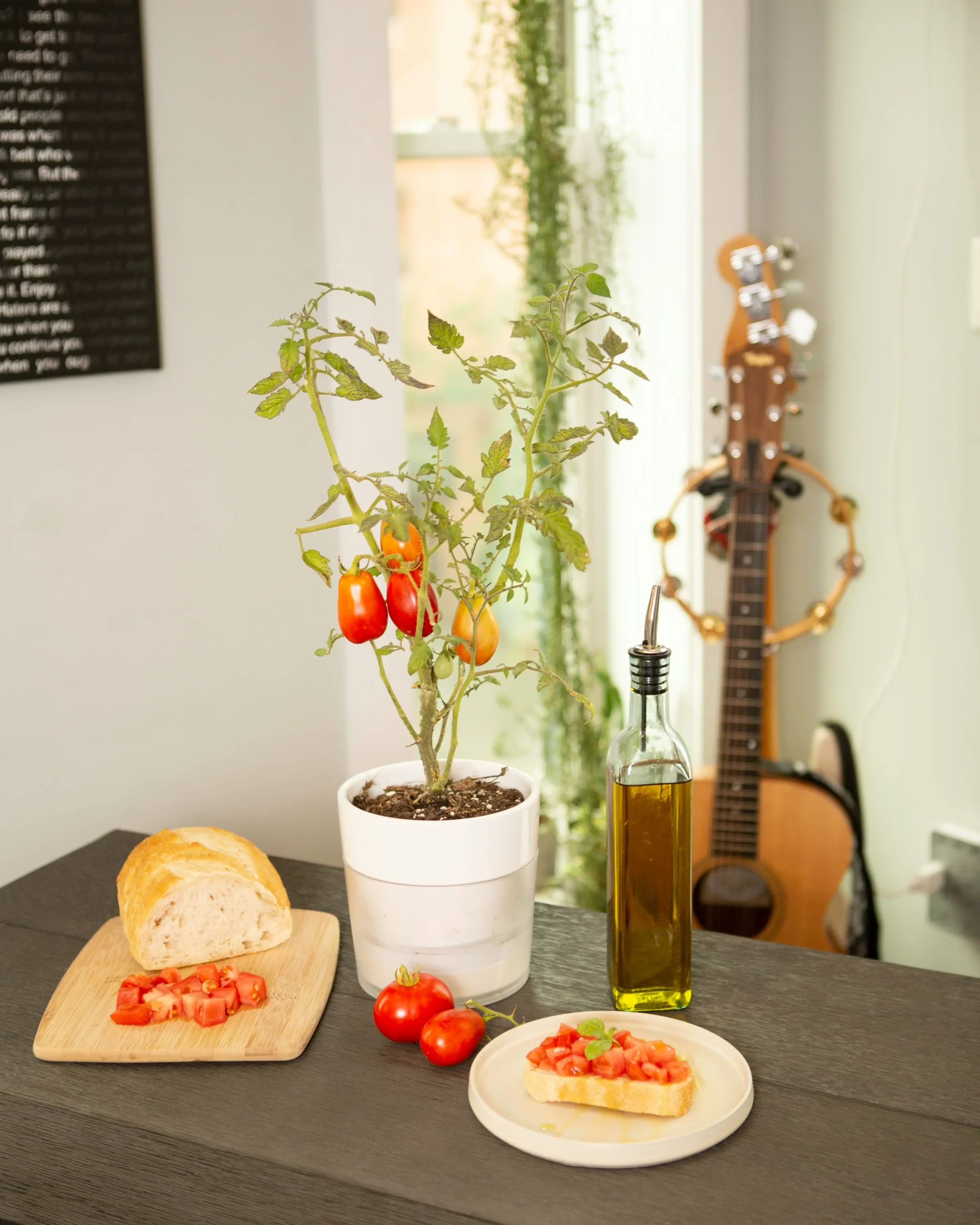
Best Weather and Conditions for Indoor Tomatoes
Although grown indoors, tomatoes prefer conditions that mimic a warm, sunny climate:
- Day Temperature: 21–27°C (70–80°F)
- Night Temperature: 18–20°C (65–68°F)
- Humidity: Moderate, 50–70%
- Light: 12–16 hours of bright, indirect sunlight or grow light
Maintaining stable temperature and proper light ensures strong seedlings, vigorous growth, and high fruit yield.
Factors Affecting Tomato Seed Germination
1. Temperature
Temperature plays an important role in Germination Too cold slows germination while too hot can cause uneven sprouting. Ideal temperature for Germination is 21–27°C (70–80°F)
2. Moisture:
- Seeds need consistently moist soil but not waterlogged.
- Overwatering can cause rotting while underwatering results in delayed germination.
3. Light:
Seeds need warmth to germinate. Once sprouted, they require bright light to prevent legginess.
4. Seed Quality:
Fresh seeds have higher germination rates. Old seeds may fail or sprout weakly.
5. Soil Quality:
Light, airy, nutrient-rich seed-starting mix promotes root growth and prevents damping-off disease.
Indoor Tomato Plant Care
Once seedlings emerge, proper care ensures strong growth and healthy fruit production.
Light
- Provide 12–16 hours of bright light daily using grow lights or a sunny windowsill.
- Insufficient light → tall, weak, leggy plants.
Watering
- Water when the top inch of soil is dry.
- Avoid waterlogging, which can cause root rot.
- Water at the base to keep leaves dry and prevent fungal disease.
Temperature
- Ideal growth temperature: 18–26°C (65–80°F) during the day, slightly cooler at night.
- Avoid drafts or extreme temperature fluctuations.
Fertilizing
- Use balanced, water-soluble fertilizer every 2–3 weeks.
- Once flowers appear, switch to high-phosphorus fertilizer to encourage fruiting.
Support
- As plants grow, provide stakes or small cages to support stems.
- Prune lower leaves to improve airflow and reduce disease risk.
Harvesting Tomatoes Indoors
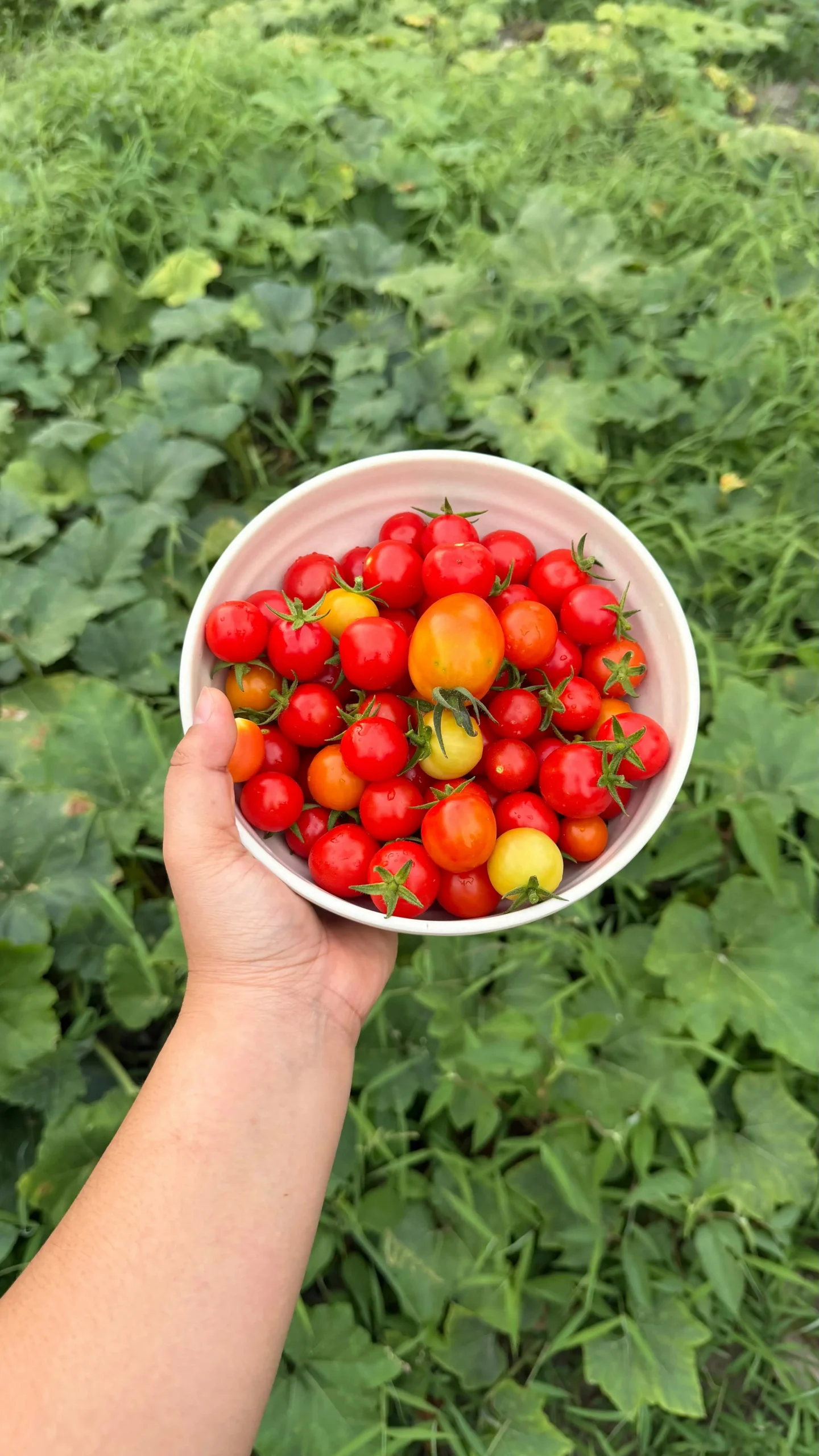
- Tomatoes can be harvested when fruits reach full color and feel firm but slightly soft.
- Regular harvesting encourages continuous fruit production.
- For smaller varieties like cherry tomatoes, pick frequently to avoid overripe fruit.
Common Problems and Solutions
Leggy seedlings
Cause : Lack of light
Solution : Provide more bright light or grow lights
Yellowing leaves
Cause : Overwatering or nutrient deficiency
Solution : Adjust watering, fertilize as needed
Blossom drop
Cause : Temperature too high or low
Solution : Maintain stable, moderate temperatures
Fungal diseases
Cause : Poor airflow or overwatering
Solution : Improve ventilation, water at soil level
Yes — growing tomatoes indoors requires nothing more than a container, the right soil mix, a sunny windowsill or grow light, and consistent care.
Indoor tomato plants need 12–16 hours of bright light daily.
The ideal daytime temperature to grow tomatoes indoors is 21–27°C (70–80°F), dropping slightly to 18–20°C (65–68°F) at night.
Harvest your indoor tomatoes when the fruit reaches its full colour and feels firm but gives slightly under gentle pressure.
Not always — but a south-facing window providing 12–16 hours of direct light daily is rare in most homes. A full-spectrum LED grow light gives your indoor tomato plant the consistent light intensity.



- Be Respectful
- Stay Relevant
- Stay Positive
- True Feedback
- Encourage Discussion
- Avoid Spamming
- No Fake News
- Don't Copy-Paste
- No Personal Attacks
- Be Respectful
- Stay Relevant
- Stay Positive
- True Feedback
- Encourage Discussion
- Avoid Spamming
- No Fake News
- Don't Copy-Paste
- No Personal Attacks
