Struggling with Coriander? Discover the Secret to Growing Fresh Coriander Indoors
Published: 17 Apr 2026
Coriander has a reputation for being finicky, it flowers too fast. It wilts in the heat, and just when you need a handful for guacamole, it’s gone to seed. But here’s the secret most gardeners don’t know: cilantro thrives indoors, especially in winter, and it’s far more reliable than any outdoor.
This beginner-friendly guide walks you through everything you need to know.
Why Grow Cilantro Indoors?
Coriander prefers mild, stable conditions rather than extreme heat or cold. Benefits of growing cilantro indoors include:
- Fresh, chemical-free herbs year-round
- Fast growth and repeated harvests
- Minimal space requirements
- Control over temperature, light, and watering
- Better protection from outdoor pests and extreme weather
Growth Timeline for Coriander
- Germination: 7–10 days
- Seedling Stage: 2–3 weeks
- Harvest Stage: 4–6 weeks
- Continuous Harvesting: Up to 2–3 months
Start with Quality Seeds
More than half of all cilantro-growing issues are linked to poor germination. Before planting, ensure your seeds are viable.
How to Test Seed Viability
- Take 20–30 cilantro seeds.
- Place them on a damp paper towel.
- Seal the towel in a plastic bag not airtight.
- Keep it warm slightly above room temperature.
- After 7–10 days, check how many seeds have sprouted.
How to calculate viability:
Number of sprouted seeds ÷ Total seeds × 100
Aim for 80% or higher germination rate for best results.
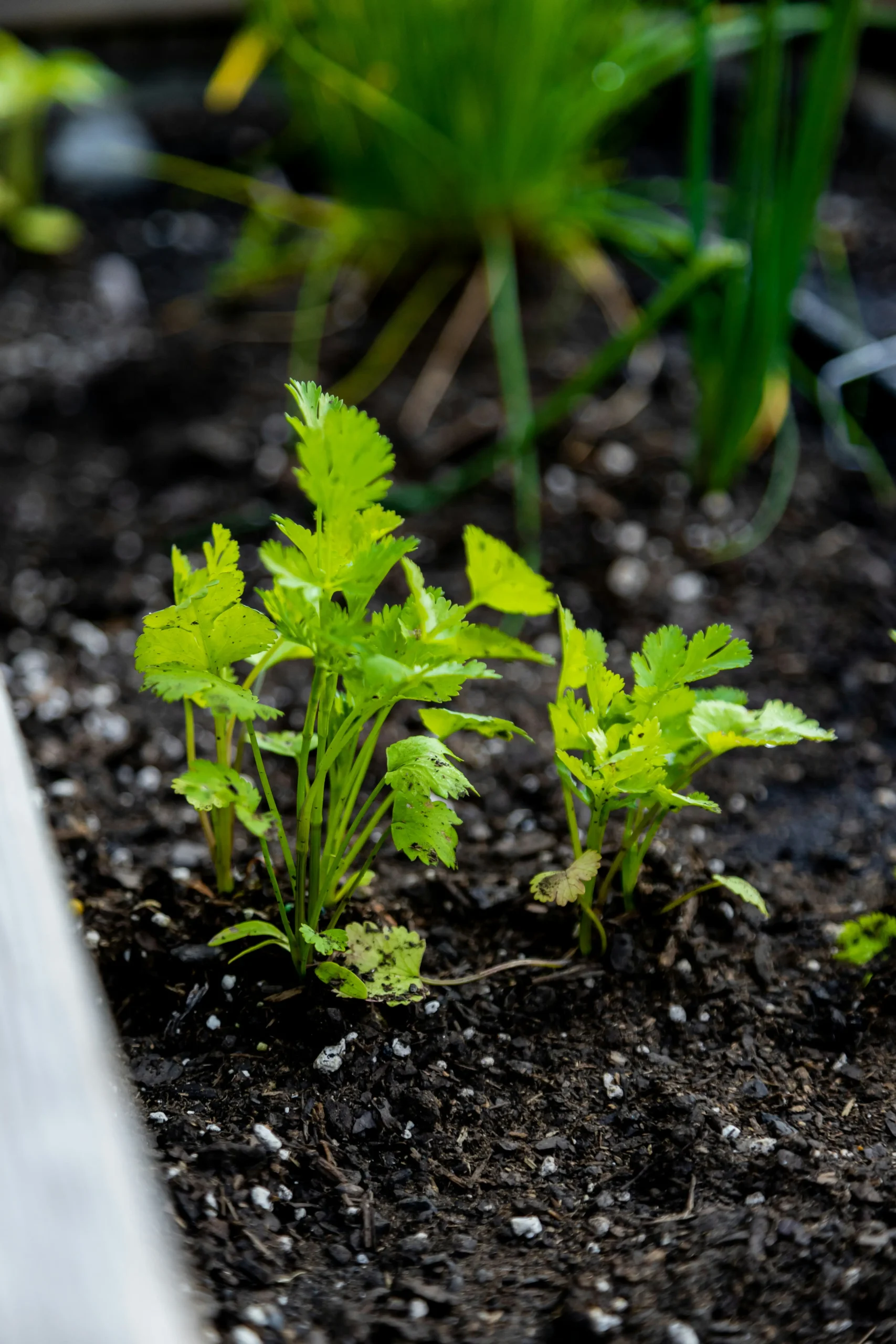
A Proven Guide to Grow Perfect Coriander Indoors
1. Choose the Right Soil
Coriander needs a light, airy, organic-rich soil to thrive.
Ideal Soil Conditions
- Loose and well-draining
- Rich in organic matter
- Neutral pH (6.2–6.8)
- Not compacted
Avoid heavy garden soil, which can hold too much moisture and suffocate roots.
Best Soil Mix for Coriander:
- 50% compost
- 50% coconut coir or peat
- Optional: slow-release organic fertilizer
You can also use a high-quality potting mix designed for container herbs.
2. Choose the Right Container
Cilantro doesn’t need deep soil because it has a shallow, fibrous root system.
Best Container Features:
- Minimum depth: 5 inches
- Drainage holes required
- Wider pots work better than deep ones
Good drainage is critical coriander hates sitting in soggy soil.
3. Planting Coriander Seeds
- Fill the pot with soil and gently compress it about 1 inch.
- Scatter seeds evenly on the surface, spaced about ½ inch apart.
- Cover seeds lightly with soil (no more than ½ inch deep).
Don’t crack cilantro seeds before planting. It’s unnecessary and can damage them.
4. Watering for Germination
Watering is key to germination. Cilantro seeds need moisture to activate the process of imbibition—when the seed absorbs water and begins sprouting.
Watering Tip:
To avoid disturbing seeds:
- Place a paper towel over the soil.
- Water gently over the towel.
- Keep the soil consistently moist but not soaked.
The paper towel helps retain moisture and prevents seeds from shifting.
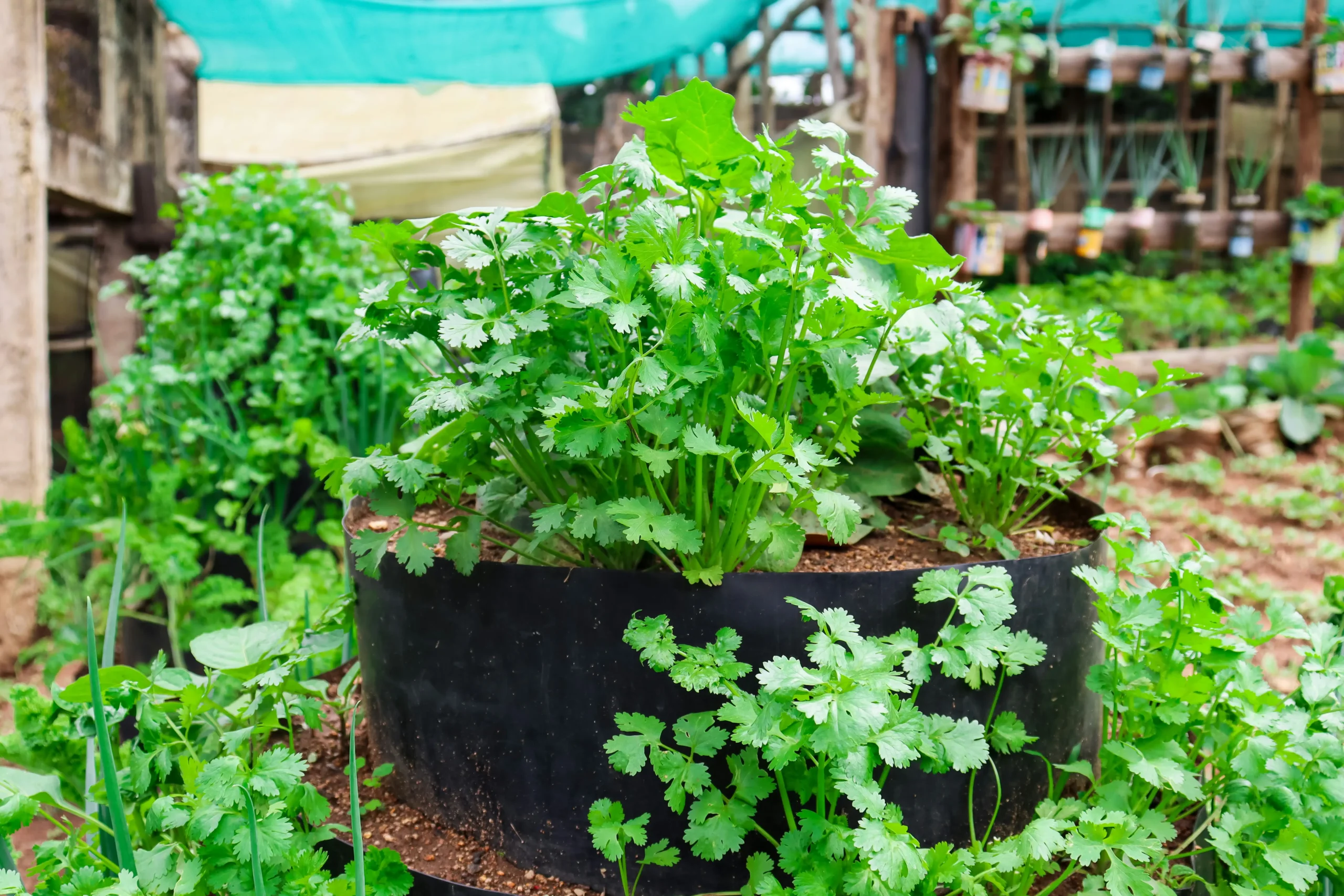
Ideal Conditions for Germination
Although cilantro prefers cooler growing temperatures, warm soil helps seeds germinate faster.
- Soil temperature: 26–29°C (80–85°F)
- Time to germinate: 7–10 days
- Light: Not required for germination
- Keep soil moist, not waterlogged
A seedling heat mat can help speed up germination indoors.
5. Light Requirements for Indoor Coriander
Once seedlings emerge, light becomes critical.
- 10–14 hours of light per day
- Bright indirect sunlight or grow lights
- South-facing windows work best
Insufficient light causes
- Leggy, weak stems
- Pale leaves
- Slow growth
If natural light is limited, use LED grow lights placed 2–6 inches above the plants.
6. Watering & Feeding
- Keep soil evenly moist, not soggy.
- Water when the top inch of soil feels dry.
- Light misting helps in dry indoor air.
- Avoid over-fertilizing—cilantro doesn’t need heavy feeding.
If needed, use a diluted organic liquid fertilizer once every 2–3 weeks.
7. Temperature & Humidity
Cilantro prefers cool, stable conditions.
- Day temperature: 18–24°C (65–75°F)
- Night temperature: 12–18°C (55–65°F)
- Moderate humidity
- Good airflow to prevent mold
Avoid hot, dry conditions as they can cause bolting (early flowering ).
8. Harvesting Cilantro
Unlike basil, cilantro doesn’t branch when cut back. Instead, it grows from a central crown.
How to Harvest:
- Cut only the outer leaves and stems.
- Leave the center intact so the plant keeps producing.
- Harvest regularly for continuous growth.
Always harvest from the outside in. Take the outer leaves and shoot only. Leave the youngest centre growth completely intact. This allows the plant to continue producing fresh leaves from its central growing point.
With proper care, cilantro can be harvested multiple times over several months.
Common Problems & Solutions
Poor Germination
Cause: Old seeds, compacted soil, or low soil temperature.
Fix: Use fresh seeds, loose soil, and maintain warm soil during germination.
Leggy Plants
Cause: Insufficient light.
Fix: Increase light exposure or use grow lights.
Bolting (Early Flowering)
Cause: High heat or stress.
Fix: Keep plants cool and well-watered.
Yellowing Leaves
Cause: Overwatering or poor drainage.
Fix: Allow soil to dry slightly between waterings.
Pests (Aphids & Spider Mites)
Fix: Use organic treatments or restart if infestation is severe.
To succeed in growing coriander indoors, use well-draining soil, maintain consistent moisture, provide 10–14 hours of light daily, and keep temperatures cool and stable.
In indoor coriander gardening, germination takes 7–10 days, and you can start harvesting fresh leaves within 4–6 weeks.
No, coriander seed germination indoors does not require light. Seeds germinate best in warm, moist soil with temperatures around 26–29°C.
The best grow lights for cilantro indoors are full-spectrum LED lights that provide 10–14 hours of consistent light and support healthy leaf growth without excessive heat.
To prevent yellow leaves on indoor cilantro, avoid overwatering, ensure proper drainage, and provide balanced nutrients with occasional light fertilization.



- Be Respectful
- Stay Relevant
- Stay Positive
- True Feedback
- Encourage Discussion
- Avoid Spamming
- No Fake News
- Don't Copy-Paste
- No Personal Attacks
- Be Respectful
- Stay Relevant
- Stay Positive
- True Feedback
- Encourage Discussion
- Avoid Spamming
- No Fake News
- Don't Copy-Paste
- No Personal Attacks
