Best Indoor Ornamental Plants for Every Room, Light Level, and Care Style
Published: 26 Apr 2026
The best indoor ornamental plants are not simply the one that looks attractive in a photo. It needs to match the light, temperature, available space, and amount of care your home can provide. A plant that thrives beside a bright window may struggle badly in a darker bedroom, while another can handle lower light with much less attention.
This guide compares some of the most useful ornamental plants for indoor growing and explains where each one performs best. Instead of choosing a plant only for its appearance, you will learn which options suit bright rooms, low light, humid spaces, beginners, and homes where watering is easily forgotten.
How to Choose an Indoor Ornamental Plants That Will Actually Thrive
Start with the room rather than the plant. The amount and quality of natural light can vary dramatically between windows, and this is often the deciding factor in whether an ornamental plant grows well.
A bright south or west facing window can provide intense sunlight, while a north facing room may offer much weaker illumination. Some plants tolerate these conditions, but tolerance does not mean they will produce their best growth.
Consider four things before buying:
- How much natural light the room receives
- How much space the mature plant will need
- How frequently you can water and maintain it
- Whether you want foliage, flowers, trailing growth, or an upright form
Once these conditions are understood, choosing becomes much easier.
Best Indoor Plants for Bright Indirect Light
Bright indirect light suits a large range of ornamental houseplants. It provides enough energy for strong growth without exposing plants that dislike harsh sunlight to prolonged direct rays.
Rubber plant is an excellent choice when you want large, glossy foliage and a more substantial floor plant. It works particularly well in a bright room where it has enough space to develop vertically.
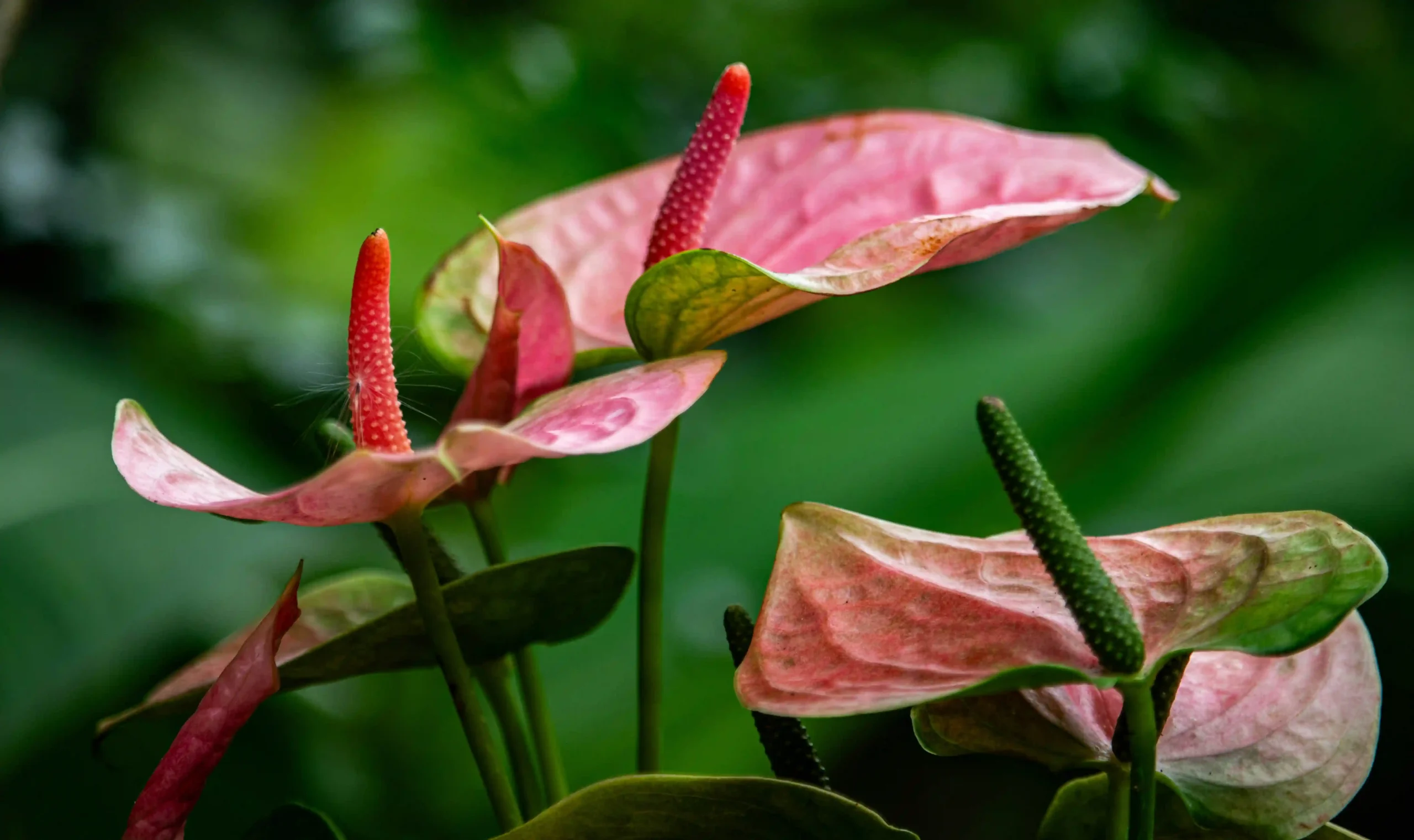
Anthurium is better suited to gardeners who want ornamental foliage combined with long lasting colorful flowers. Bright filtered light is particularly important if flowering is a priority.
Spider plant is another versatile option for bright indoor locations. Its arching foliage and hanging plantlets make it especially attractive from shelves or hanging containers.
Pothos can also perform very well in bright indirect light. Stronger light generally produces more vigorous growth, while variegated forms often maintain their patterns better when light is sufficient.
Best Indoor Plants for Low Light Rooms
Low light does not mean complete darkness. Every plant needs usable light, but some ornamental plants tolerate weaker indoor conditions much better than others.
Snake plant is one of the strongest choices for rooms where natural light is limited. Its upright leaves require little space and the plant is also relatively tolerant of dry conditions.
ZZ plant is another excellent choice for people who want attractive foliage without frequent watering. Its thick underground structures allow it to cope with periods of dryness better than many leafy houseplants.
Pothos is useful when you want a trailing plant for a lower light location. Growth will generally be slower than in a brighter position, but it remains one of the more adaptable choices.
Dracaena can also work in moderately lit interiors, particularly when the goal is to add height without occupying a large amount of floor space.
Remember that low light should not be interpreted as no light. A plant placed in a windowless room may survive temporarily, but long term growth usually requires artificial lighting.
Best Ornamental Plants for Bedrooms
Bedrooms often have lower light, limited floor space, and relatively stable temperatures. Compact or adaptable plants are therefore easier to manage than large tropical specimens.
Snake plant works particularly well because its upright growth takes little horizontal space.
Pothos is useful when you want greenery on a shelf, bookcase, or hanging planter rather than another floor plant.
Spider plant adds a softer appearance with arching leaves and works well where there is enough indirect light.
If your bedroom receives very little natural light, consider a small grow light rather than choosing a plant solely because it is advertised as a low light plant.
Best Ornamental Plants for Bright Living Rooms
A living room with strong natural light gives you more options, especially if there is enough space for larger foliage plants.
Rubber plant creates a bold focal point because of its large leaves and upright form.
Areca palm provides a softer, more tropical appearance and works particularly well when you want a larger plant with fine, feathery foliage.
Anthurium is useful for adding color through flowers rather than relying entirely on green foliage.
Pothos works well around furniture, shelves, and elevated planters because its vines can be trained to trail downward or climb upward.
The important point is to consider mature size. A plant that looks small in a nursery pot can eventually dominate a narrow room.
Best Ornamental Plants for Humid Rooms
Bathrooms and other naturally humid rooms can be useful locations for plants that dislike very dry indoor air. However, humidity cannot compensate for inadequate light.
Calathea is one of the most decorative choices for a bright bathroom because of its patterned foliage. It generally needs more consistent moisture and humidity than tougher houseplants.
Spider plant can also adapt well to humid indoor conditions when sufficient light is available.
Anthurium benefits from higher humidity and bright filtered light, making a suitable bathroom or humid room potentially useful.
Always consider ventilation. High humidity combined with stagnant air and wet foliage can create conditions that encourage fungal problems.
Best Low Maintenance Ornamental Plants for Beginners
If you frequently forget to water, start with plants that tolerate occasional dryness rather than plants that require constantly moist soil.
Snake plant is one of the easiest choices because it stores moisture and does not need frequent watering.
ZZ plant is similarly forgiving and is particularly useful for offices or rooms where plant care is not a daily priority.
Pothos is another beginner friendly option because it adapts to a range of indoor conditions and can recover from occasional mistakes more readily than many sensitive houseplants.
This does not mean these plants can survive indefinitely without care. Low maintenance still requires appropriate light, drainage, and occasional watering.
Best Flowering Ornamental Plants for Indoor Color
If flowers are more important to you than foliage, choose a plant based on its ability to flower under indoor light rather than simply its appearance when purchased.
Anthurium is one of the strongest choices for colorful indoor displays because its modified flower structures can remain attractive for a long time.
Peace lily provides white flowers above dark green foliage and can work well in bright indirect light.
For more demanding flowering plants, success depends heavily on providing enough light. A plant may remain alive in a dim room while producing little or no flowering growth.
Best Trailing and Climbing Plants for Small Spaces
When floor space is limited, use vertical surfaces and elevated positions.
Pothos is particularly useful because its stems can trail from hanging baskets or be trained upward on a support.
English ivy provides another option for trailing displays, although it generally performs better when given suitable light and good airflow.
Spider plant creates a naturally cascading appearance when grown in a hanging container.
Trailing plants should still receive adequate light throughout their growing area. A vine positioned far from a window may become increasingly sparse as it extends away from the light source.
Best Large Ornamental Plants for Empty Corners
Large plants can transform an empty corner, but they should be selected according to the available light and ceiling height.
Rubber plant is a strong choice for a bright room because its broad leaves create visual impact without requiring a spreading canopy.
Areca palm works well when you want a lighter, more tropical appearance.
Dracaena can provide height with a relatively narrow footprint, making it useful where floor space is limited.
Do not buy a large plant simply because the corner looks empty. Check the mature size first and make sure the room can provide enough light.
How to Match Plants to Your Home
The easiest way to narrow your choices is to match the plant to the strongest limitation in your room.
| Indoor condition | Strong choices |
|---|---|
| Low light | Snake plant, ZZ plant, Pothos |
| Bright indirect light | Anthurium, Rubber plant, Pothos |
| Humid room | Calathea, Anthurium, Spider plant |
| Limited floor space | Pothos, Spider plant, Snake plant |
| Large empty corner | Rubber plant, Areca palm, Dracaena |
| Forgetful watering | Snake plant, ZZ plant, Pothos |
| Colorful flowers | Anthurium, Peace lily |
| Trailing display | Pothos, English ivy, Spider plant |
This comparison is more useful than choosing plants based only on popularity because the same plant can perform very differently in two homes.
How to Keep Ornamental Plants Looking Healthy Indoors
Once you have selected the right plant, concentrate on the fundamentals rather than constantly changing its care routine.
Provide the strongest suitable light available, use containers with drainage holes, and water according to the moisture level of the growing medium rather than following a rigid calendar.
Keep plants away from strong heating and cooling vents. Clean dusty leaves when necessary, inspect new growth for pests, and rotate plants occasionally if growth becomes uneven.
Most importantly, learn the plant’s normal appearance. A sudden change in leaf color, growth rate, or soil moisture can reveal a problem before serious damage occurs.
Common Mistakes That Make Indoor Plants Decline
Many indoor plant problems are caused by choosing a plant that does not match the room. Other common mistakes include:
- Watering every plant on the same schedule
- Assuming low light means no light
- Using containers without drainage
- Keeping soil constantly wet
- Placing plants beside heaters or air conditioners
- Ignoring the mature size of a plant
- Moving plants repeatedly between very different environments
- Fertilizing a stressed plant before identifying the real problem
Correcting the environment is usually more effective than adding more fertilizer or other products.
Final Thoughts
The best ornamental plants for your home is the one that fits your actual growing conditions. Snake plants and ZZ plants are excellent for lower maintenance spaces, Pothos and English ivy provide flexible trailing displays, while Anthurium and Calathea offer more decorative foliage and flowers when their environmental needs can be met.
Instead of choosing a plant because it looks good in a photograph, start with your light, available space, humidity, and care routine. Once those factors match the plant, maintaining an attractive indoor garden becomes much easier.
Indoor ornamental plants are plants grown mainly for decoration. They are used to enhance the beauty of indoor spaces with their leaves, colors, and flowers.
The Anthurium and Calathea are excellent decorative plants because of their colorful appearance.
Yes, many indoor plants are safe to keep in bedrooms and can improve the overall atmosphere.
Choose a plant based on your light conditions, space, and how much care you can provide.
The Spider Plant is one of the easiest plants to grow and maintain indoors.
Yes, plants like Pothos and Snake Plant can survive in low light conditions.




- Be Respectful
- Stay Relevant
- Stay Positive
- True Feedback
- Encourage Discussion
- Avoid Spamming
- No Fake News
- Don't Copy-Paste
- No Personal Attacks
- Be Respectful
- Stay Relevant
- Stay Positive
- True Feedback
- Encourage Discussion
- Avoid Spamming
- No Fake News
- Don't Copy-Paste
- No Personal Attacks
